
 Museum/Current place of storage:
 |
Paris, Louvre. |
 Inv. no:
 |
Ma 3068-MND 1014 |
 Dimensions:
 |
|
 Material:
 |
H. 0,715m., w. 0,41m., th. 0.24m. |
 Findspot:
 |
In 1855 in the Metroon of Piraeus, together with other finds (illegal excavations of the French military occupation squad of Piraeus during the Crimean War, headed by lieutenant colonel E. de Vassoigne; for the sanctuary, the finds and the excavation see in brief Vermaseren 1982, 68-70; Petrocheilos 1992, 24-25). Purchased by the Louvre in auction in May 1914. Formerly in the antiquities collection of general Μarquis de Vassoigne. |
 Original Display Location:
 |
In the Metroon (the exact display location is unknown). |
 Date:
Date: |
163/164 CE (based on the inscription – during the archonship of Philistides; IG II2, 2887). |
 Statuary Type (body) :
 |
No specific statuary type is reproduced (himation-clad woman). |
 Mode of Self-Representation (head):
 |
The coiffure follows contemporary imperial fashion protypes (“Modefrisur”), while the face is idealized with individual traits of mature age. |
 Civic Presence (Social Role Represented):
 |
Priestess of Cybele/Mother of the Gods. |
 Inscribed Base:
 |
Yes (IG II2, 2887). |
 Author:
 |
Panagiotis Konstantinidis |
 Added:
 |
2024-09-11 |
 Edited:
 |
Description - Comments:
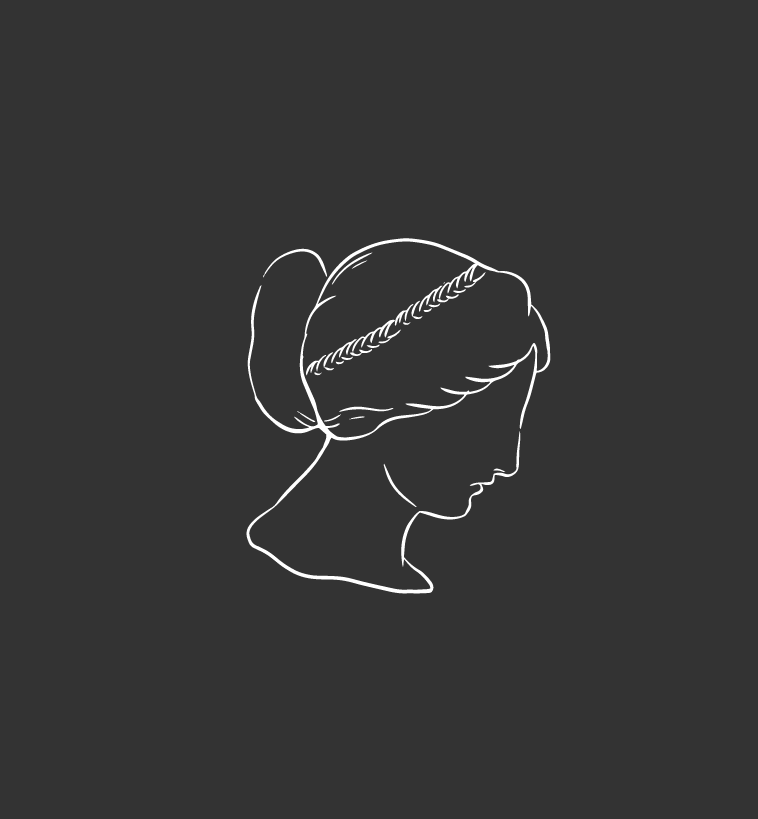
The bust is preserved essentially intact, together with its inscribed base. Minor chipping is sporadically attested on the surface of the himation. Rasp marks are evident on the surface of the garments and the neck. The entire back of the bust, including the support, has been left roughly worked with the claw chisel, indicating that the back of the bust was not meant to be seen. Traces of red paint are preserved sporadically on the letters of the inscription. The surface of the face is polished. The bust depicts an old woman turning her head slightly to the right. There are wrinkles on the forehead and the outer corners of the eyes, the skin is rendered loose on the cheeks, while there is a small double-chin under the jaw, and a “ring of Venus” on the surface of the neck. Additional individual physiognomic features are the round chin and the elongated mouth with thin lips. The face is oval and sports a plastically rendered unibrow (on their protruding surface the texture of the individual hairs is rendered by thick oblique incisions) and large almond-shaped eyes with wide lids. The iris, pupil (shield-shaped; see P. Konstantinidis, Γυναικείοι δυναστικοί εικονιστικοί ανδριάντες αυτοκρατορικής περιόδου από την Ελλάδα [τέλη 1ου αι. π.Χ. – 5ος αι. μ.Χ.], Athens 2024, 397-398, notes 524 and 531) and tear-duct are indicated. She wears a chiton and a long himation that almost completely covers the torso. Between the body and the rectangular base is a band of acanthus leaves, probably indicating that the portrait is posthumous (see H. Jucker 1961, 33-38; according to some scholars the acanthus is a symbol of prosperity – see G. Daltrop, review of Jucker 1961, GGA 217 [1965], 247-268; also Chioti 2012, 32 with bibliography in note 132). The fan-shaped support at the back confirms the bust as a product of an Attic workshop (for this feature see Fittschen 2001, 71-77). The hair is divided at the top of the forehead into two equal parts and is directed with strong waves to the sides and back, covering a large part of the ears along the way. At the back of the head the mass of hair is woven into a braid that forms a spiral-shaped small bun (the texture of the individual strands of hair is indicated by incised triangles and lines). In the remaining, upper, part of the head, the coiffure forms two zones. At the top of the skull the hair is combed towards the back, while in the space between there and the wavy locks lower around the face a small group of locks are combed vertically on either side. Two small curly locks of hair are left free on the surface of the marble on either side of the neck. As I. Chioti (2012, 163-164) observes, the coiffure reproduces a somewhat simplified version of the eighth portrait type of Faustina the Younger (for the type see Fittschen 1982, 37, 42, 43, 60-63 [ca. 162 CE]). The bust can be accurately dated to 163/164 CE based on the prosopography of the inscription (see De Kersauson 1996, 308); the dating agrees both with the type of the headdress, and the size of the bust’s torso (it includes a large part of the chest up to below the breasts; for the dating of busts based on form see R.R.R. Smith ed., Aphrodisias II. Roman Portrait Statuary from Aphrodisias, Mainz am Rhein 2006, 227 with note 10 [R.R.R. Smith]). Despite objections raised (Jucker 1961, 97) due to the absence of a strophion or wreath, there is no reason to reject the identification of the woman depicted as Melitine, daughter of Primus from the deme of Paiania (Μελιτίνη Πρίμου ἐκ Πεανιέων), who served as a priestess (ἱερατεύσασα) in the private sanctuary of Cybele/Mother of the gods and Attis in Piraeus (the sanctuary belonged to and was run by a private cult association). The worshiped deity is not mentioned in the inscription, but it is inferred with sufficient certainty from the numerous co-finds of the bust during the excavation of the site in 1855, which included several lengthy inscriptions regarding the function and organization of the sanctuary (for the rest of the finds from the site of the sanctuary see Vermaseren 1982, 68ff; Petrocheilos 1992, 24-25). These inscriptions inform us that the association of worshippers (ὁργεώνες) appointed annually a priestess, and that the latter was assisted by male priests, thus fully agreeing with the information given in the inscription on the base of the bust. The latter further states that the erection of the bust in the sanctuary was made by Melitine herself (hence if the bust is a posthumous portrait, the commission was probably completed by her family), probably on the occasion of the completion of her annual term as a priestess. As H. Jucker (1961, 97) observes, the erection of portraits of priests or initiates in private association-run sanctuaries is not unusual. The closest parallel is the bust of Aurelia Euposia (IG XII 3, 1126), a member and benefactress of the association of initiates of Dionysos Trieterikos on the island of Milos, which she herself commissioned and erected in the private sanctuary of the god (see P. Konstantinidis, Ελληνιστική και ρωμαϊκή γλυπτική από τη Μήλο, Athens 2016, 109-113, cat, no. 35, figs. 315-327, 152-175 CE [original configuration]; ibid. 113-116, cat. no. 36, figs. 328-339 for the portrait herm of the hierophant Marcus Marius Trophimus).
Bibliography:
A.I. Antoniadis, “Πειραϊκαί αρχαιολογίαι”, Athena issue no. 2318 (1855), 3; G. Papasliotis, Athena issue no. 2325 (1855), 3; K.F. Hermann, “XIX. Die Verehrung der götterinutter im Piräeus nach neucntdeckten inschriften”, Philologus 10 (1855), 294; E. Michon, Musée du Louvre, Département des antiquités grecques et romaines. Catalogue sommaire des marbres antiques, Paris 1918, 16 no. 3068; H. Jucker, Das Bildnis im Blätterkelch. Geschichte und Bedeutung einer römischen Porträtform, Olten 1961, 97, 98, cat. no. St 45, pl. 38; J. Charbonneaux, La sculpture greque et romaine au Musée du Louvre, Paris 1963, 171, 172; Κ. Fittschen, Die Bildnistypen der Faustina minor und die Fecunditas Augustae, Göttingen 1982, 63; M.J. Vermaseren, Corpus cultus Cybelae Attidisque II, Leiden 1982, 95, no. 315; K. Fittschen, P. Zanker, Katalog der römischen Porträts in der Capitolinischen Museen und den anderen kommunalen Sammlungen der Stadt Rom III, Mainz am Rhein 1983, 85 note 3 (in cat. no. 116; K. Fittschen); K. Fittschen, “Über Sarkophage mit Portäts verschiedener Personen”, MarbWPr 1984, 130 figs. 1-2; H.R. Goette, “Zwei frühseverische Bildnisse in Bonn”, BJb 184 (1984), 124 note 17; Κ. de Kersauson, Musée du Louvre. Département des antiquités grecques et romaines. Catalogue des portraits romains II, Paris 1996, 308-309, cat. no. 139; M. Bonanno-Aravantinos, “Un ritratto di sacerdotessa da una casa sull’Areopago”, in L. Bacchielli, M. Bonanno-Aravantinos eds., Scritti di antichità in memoria di Sandro Stucchi I, Roma 1996 (Studi Miscellanei 29), 344-345, 348; K. Fittschen, “Eine Werkstatt attischer Porträtbildhauer im 2 Jh. n. Chr.”, in C. Reusser ed., Griechenland in der Kaiserzeit. Kolloquium zum 60. Geburtstag von Prof. Dietrich Willers, Bern 12.-13. Juni 1998, Bern 2001, 74 no. 10, pl. 12.3; G. Despinis, Th. Stephanidou-Tiveriou, E. Voutiras eds., Αρχαιολογικό Μουσείο Θεσσαλονίκης. Κατάλογος γλυπτών του Αρχαιολογικού Μουσείου Θεσσαλονίκης ΙΙ, Thessaloniki 2003, 155 note 2 (in cat. no. 268); M.C. Sturgeon, Corinth IX.3. Sculpture. The Assemblage from the Theater, Princeton NJ 2004, 187 note 112; C. Gregoire, D. Roger eds., Roman Art from the Louvre, exhibition cat., Paris 2008, 246, cat. no. 174; I. Chioti, “Επιδράσεις του έκτου εικονιστικού τύπου της Φαυστίνας της νεότερης στα ιδιωτικά πορτρέτα του ελλαδικού χώρου”, in Th. Stephanidou-Tiveriou, P. Karanastasi, D. Damaskos eds., Κλασική παράδοση και νεωτερικά στοιχεία στην πλαστική της ρωμαϊκής Ελλάδας, πρακτικά διεθνούς συνεδρίου, Θεσσαλονίκη, 7-9 Μαΐου 2009, Thessaloniki 2012, 519; I. Chioti, Αυτοκρατορικά και ιδιωτικά πορτρέτα της εποχής των Αντωνίνων στην Ελλάδα (PhD thesis Aristotle University of Thessaloniki), Thessaloniki 2012, 163-164, 359-360, cat. no. 212, pls. 171, 175α (draws upon the eighth portrait type of Faustina the Younger).