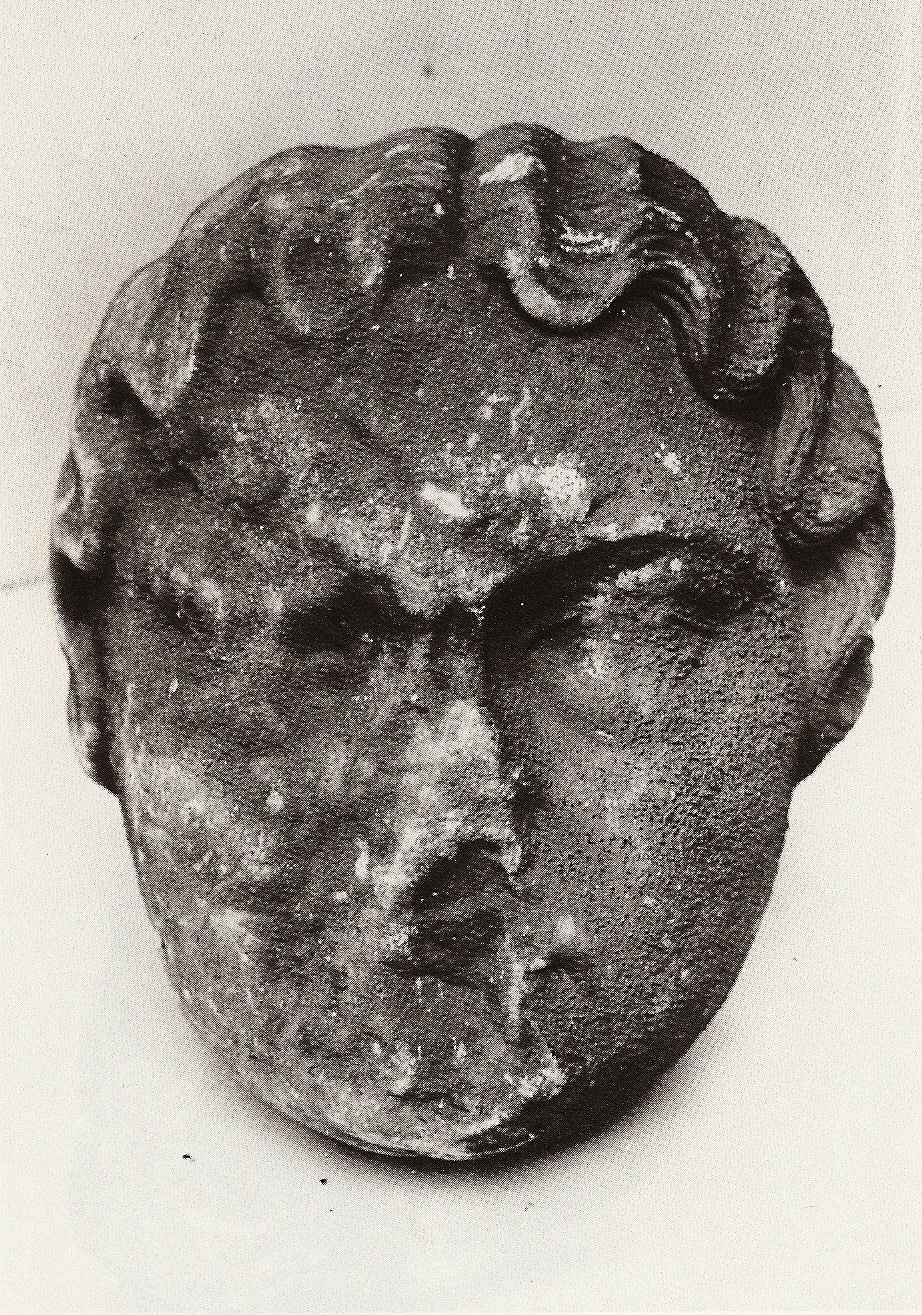
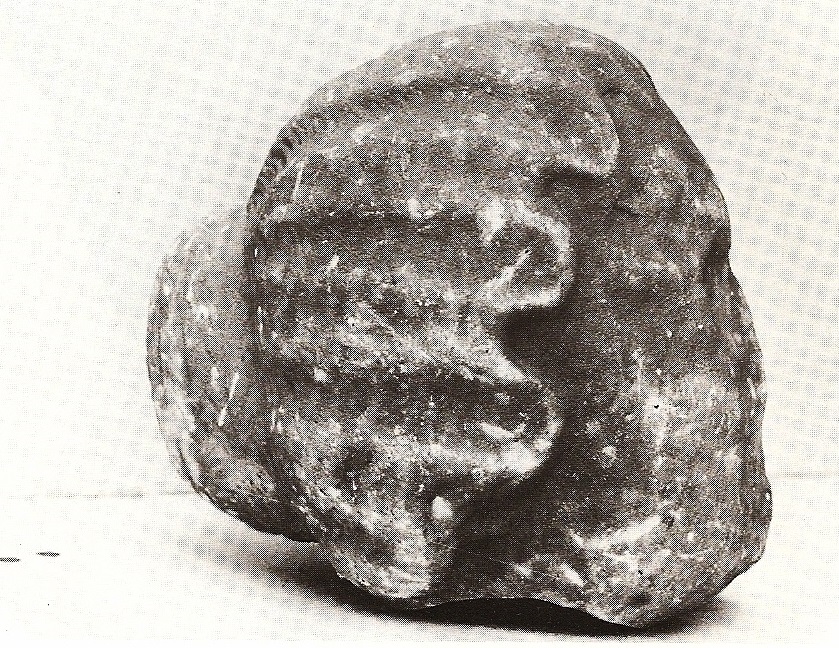
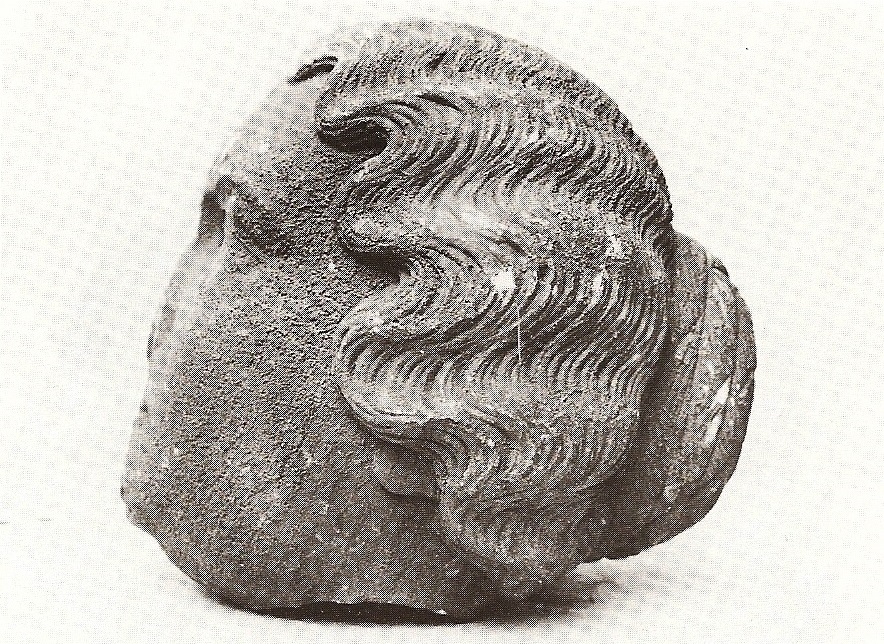
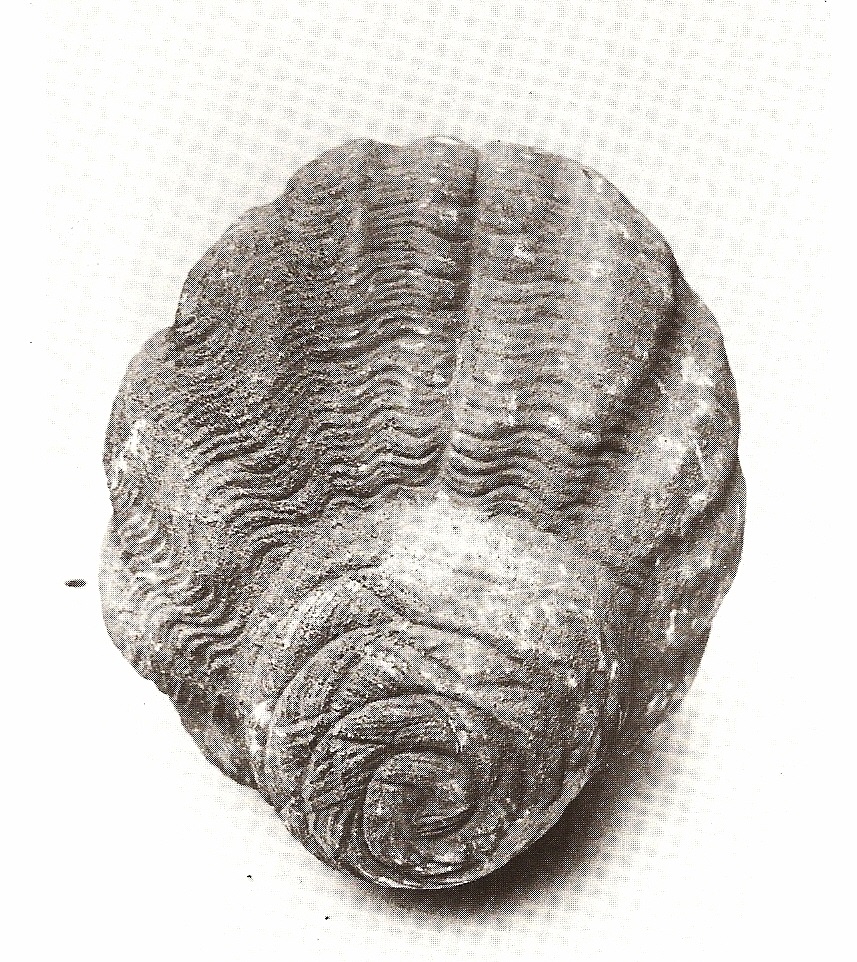
The head is preserved up to the beginning of the neck. The nose, mouth, chin, and eyes are broken off (only the inner corners of the latter are visible). Smaller breaks and chipping are evident sporadically on the surface of the marble, especially on the cheeks, forehead and hair. Traces of weathering are also evident on the marble surface. It depicts a mature woman with a plump oval face, broad forehead and cheeks. The eyes are almond-shaped with thin lids. The tear-duct is indicated. The hair is divided at the top of the forehead into two equal parts (the parting runs across the top of the skull), which are combed in wavy locks towards the back of the skull, where they gather in a large round bun placed low on the nape, consisting of five superimposed, spirally arranged, braids. The texture of the individual locks of hair on the surface of the skull is rendered with dense deep indentations worked with the point, while that of the braids of the bun with incised lines and triangles on the surface of the marble. The mass of the hair leaves the earlobes uncovered, while small lunate locks of hair are left free on the surface of the nape. The hairstyle follows the second portrait type of Lucilla, dated to ca. 166 CE (K. Fittschen, Die Bildnistypen der Faustina minor und die Fecunditas Augustae, Göttingen 1982, 78-80).
A. Datsouli-Stavridi, “Ρωμαϊκά πορτραίτα στο Μουσείο Σπάρτης”, in Πρακτικά του Α’ Τοπικού Συνεδρίου Λακωνικών Μελετών, Μολάοι 5-7 Ιουνίου 1982, (Peloponnesiaka Suppl. 9), Athens 1982-1983, 306, fig. 3; A. Datsouli-Stavridi, Ρωμαϊκά πορτραίτα στο Μουσείο της Σπάρτης, Athens 1987, 21, no. 834, figs. 37-39 (161-180 CE); I. Chioti, Αυτοκρατορικά και ιδιωτικά πορτρέτα της εποχής των Αντωνίνων στην Ελλάδα (PhD. thesis, Aristotle University of Thessaloniki), Thessaloniki, 2012, 150, 154-155, 344, αρ. κατ. 186, πίν. 152.