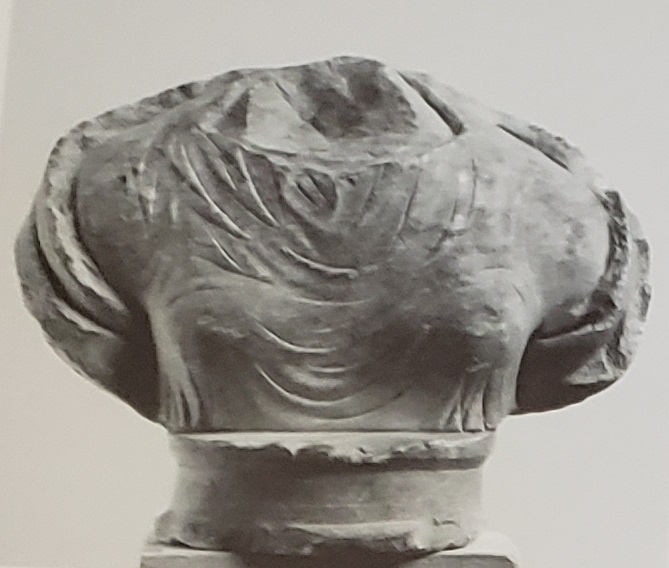
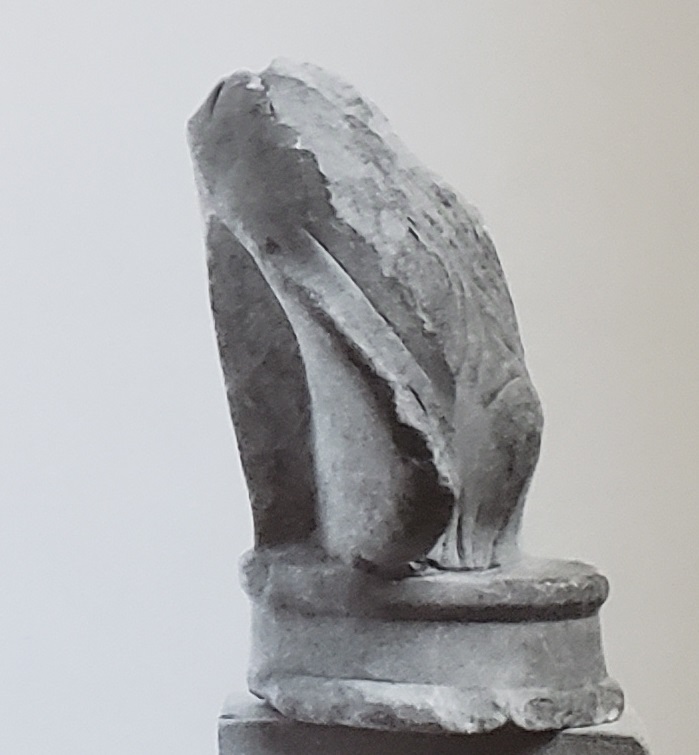
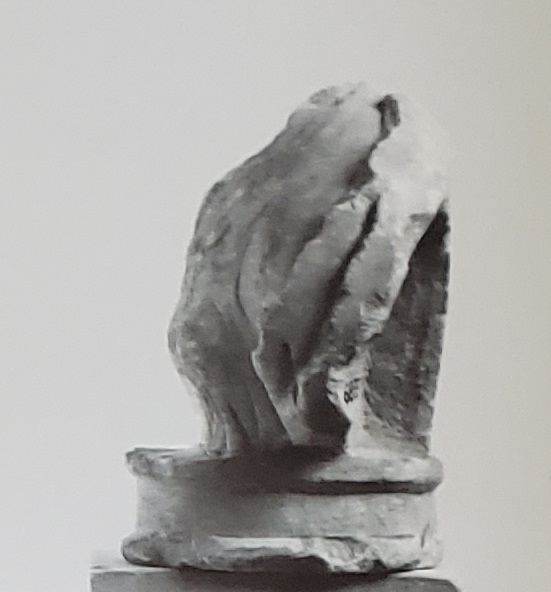
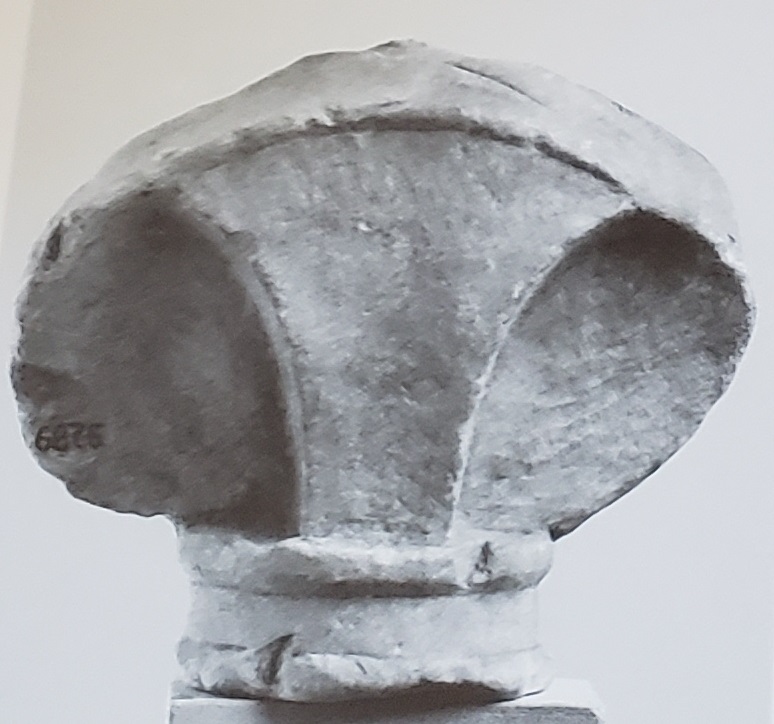
Only the head of the bust is missing, from the base of the neck. Smaller breaks and chipping are evident sporadically on the surface of the marble, especially around the edge of the himation and the cymatia of the base. It depicts a female figure wearing a thin chiton (indicated by the fine shallow pleating of the garment) and a himation that covers the back and the shoulders, and disappears behind the arms. The base is cylindrical with two simple cymatia at the top and bottom. Based on the size of the torso (up to below the breasts; cf. the portrait busts of Antoninus Pius and Marcus Aurelius, as well as those of two women from Rome, J. Fejfer, Roman Portraits in Context, Berlin 2008, 88 figs. 46 and 48, 240-241 figs. 157-158 respectively; for the dating of busts based on form see R.R.R. Smith ed., Aphrodisias II. Roman Portrait Statuary from Aphrodisias, Mainz am Rhein 2006, 227 with note 10 [R.R.R. Smith]) and its stylistic analysis (Dontas 2004, 77) the bust can be dated to the mid-Antonine period. The fan-shaped support at the back confirms the bust as a product of an Attic workshop (for this feature see K. Fittschen, (Q)Eine Werkstatt attischer Porträtbildhauer im 2 Jh. n. Chr.(Q), in C. Reusser ed., Griechenland in der Kaiserzeit.Kolloquium zum 60. Geburtstag von. Dietrich Willers, Bern 12.-13. 1998, Bern 2001, 71-77).
G. Dontas, Corpus Signorum Imperii Romani. Greece I.1 Les portraits attiques au Musée de l'Acropole, Athènes 2004, 77, cat. no. 64, pl. 48 (mid-Antonine period).