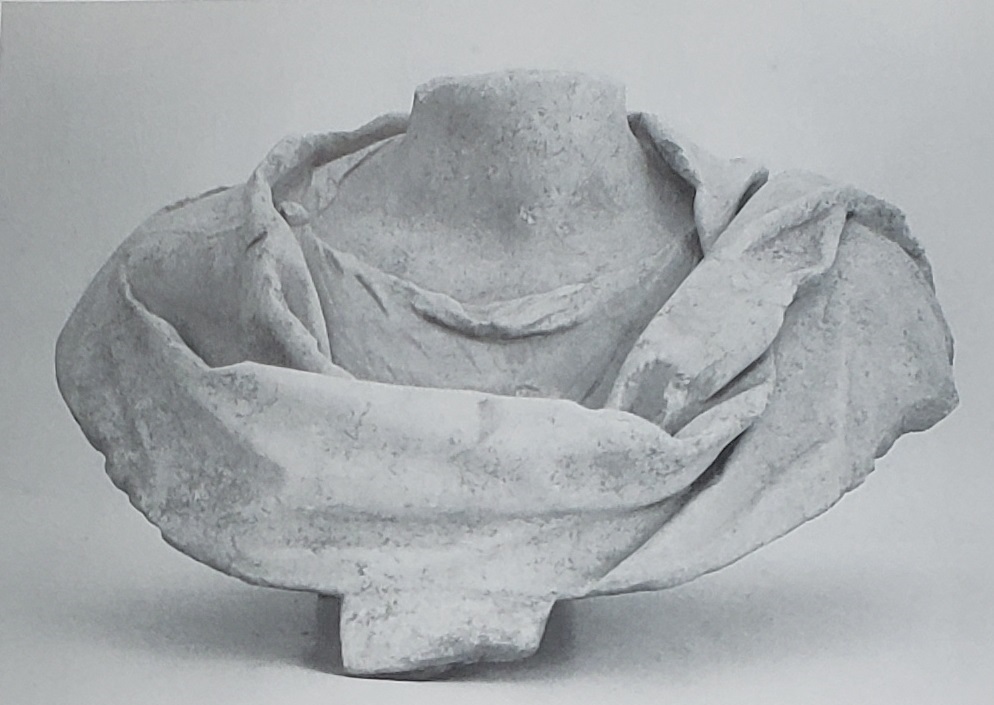
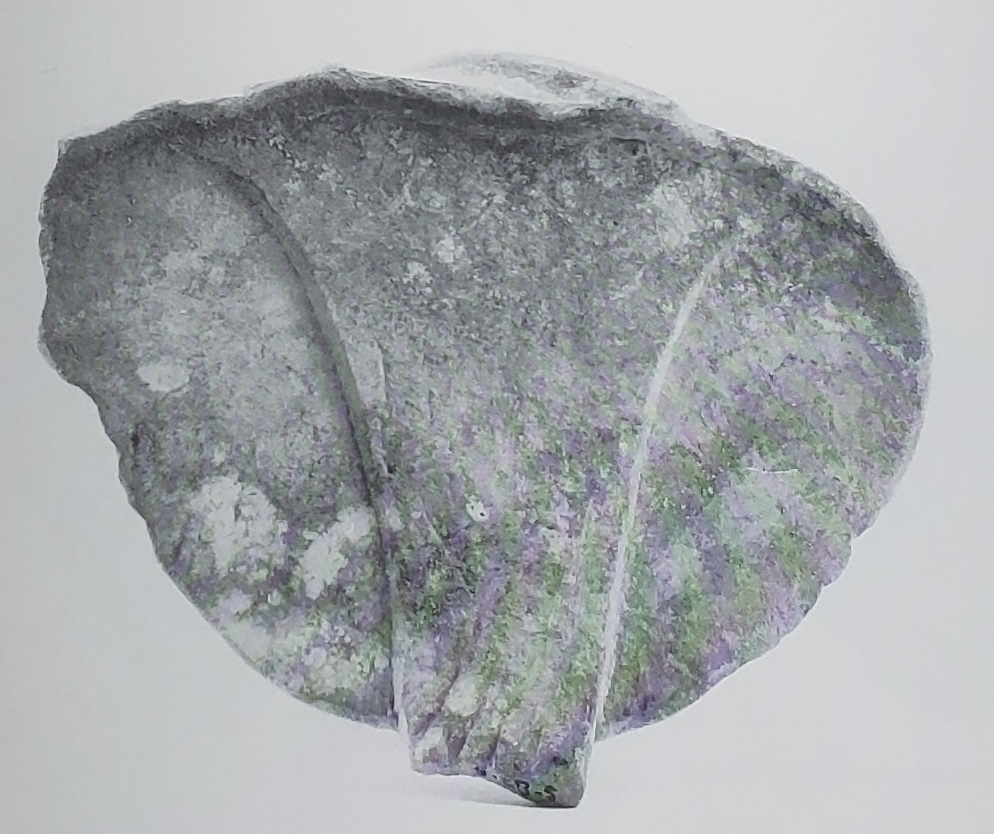
The base, except for part of the tabula, and the head of the bust are missing. The latter was attached to the neck by means of a metal dowel (the dowel-hole is preserved on the upper part of the neck), as part of either a repair or replacement of the original head. The support on the rear of the bust is fan-shaped, element identified by K. Fittschen as characteristic of Attic workshop production (K. Fittschen, “Eine Werkstatt attischer Porträtbildhauer im 2 Jh. n. Chr.”, in C. Reusser ed., Griechenland in der Kaiserzeit: neue Funde und Forschungen zu Skulptur, Architektur und Topographie; Kolloquium zum 60. Geburtstag von Prof. Dietrich Willers, Bern, 12.-13. June 1998, Bern 2001, 71-77; see also G. Despinis, Th. Stephanidou-Tiveriou, E. Voutiras eds., Κατάλογος Γλυπτών του Αρχαιολογικού Μουσείου Θεσσαλονίκης ΙΙ, Θεσσαλονίκη 2003, 155-157, cat. no. 268 with note 4 [Th. Stephanidou–Tiveriou]). Chipping is observed on the surface of the garments. It depicts a female figure wearing a chiton and a himation that covers the shoulders and chest. The size of the body of the bust (from the shoulders to the mid-chest; for the dating of busts based on form see R.R.R. Smith ed., Aphrodisias II. Roman Portrait Statuary from Aphrodisias, Mainz am Rhein 2006, 227 with note 10 [R.R.R. Smith]) and its style indicate a dating around the first half of the 2nd c. CE, in the Hadrianic or the early Antonine period (see Sturgeon 2004, 196). The fact that the bust belongs to the broader sculptural decoration of the theater indicates that its subject was of importance, and, as M. Sturgeon rightly observes, can be identified as either a benefactress of the theatre or the wife of a male benefactor (cf. the dedicatory inscription of the aedilis Erastus who sponsored the paving of the plaza east of the scaene frons of the theatre – Sturgeon 2004, 48), or even a member of the imperial family. Its larger-than-life scale may indicate the placement of the bust, high up from the street level, rather than simply the importance of its subject.
M. Sturgeon, Corinth IX.3. Sculpture: The Assemblage from the Theater, Princeton 2004, 195-196, cat. no. 78, pl. 68 (Hadrianic to Early Antonine); M. Geivanidou, Εικονιστικοί ανδριάντες στα θέατρα των ρωμαϊκών ανατολικών επαρχιών, Thessaloniki 2021, 52, 168-169, cat. no. 57, pl. 7.4.