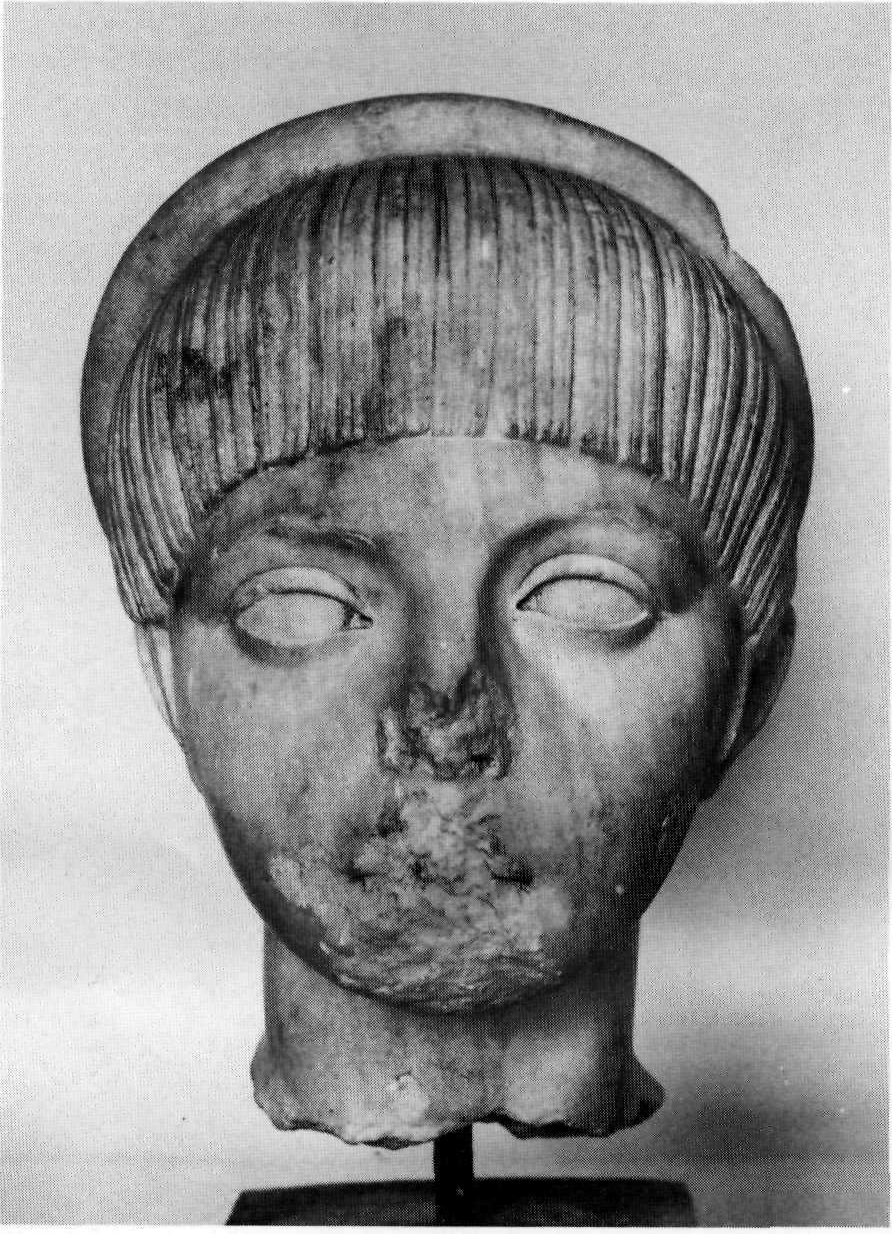
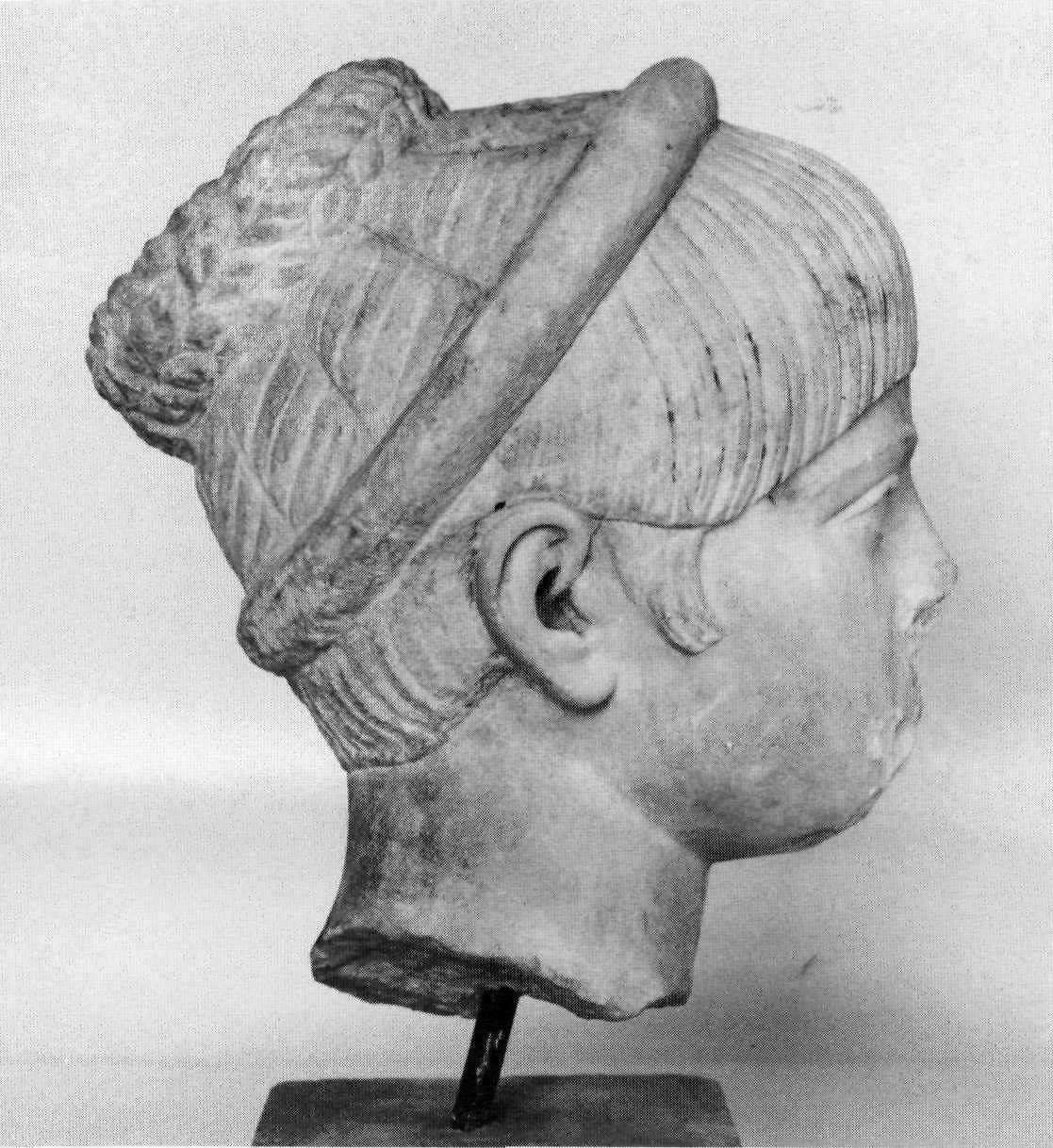
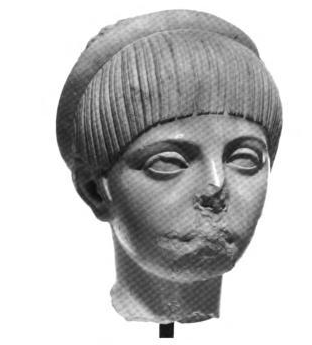
The head is well preserved, up to the base of the neck. Broken are the tip of the nose (the drill-holes for the nostrils survive), the mouth, the chin, a small part of the left cheek, as well as the left part of the strophion. It depicts a teenage girl who sports an oval smooth face, small eyes with wide lids and thin eyebrows ending in sharp edges. The hair is combed around the face in parallel vertical locks (carefully rendered with the point) the lower edge of which is trimmed at the level of the temples. At the back of the head, behind the cylindrical strophion, locks of hair are arranged in parallel “slices” ending in braids which form a cylindrical bun placed diagonally at the back of the skull. A lunate lock of hair is left free on the surface of each temple. The ears are left uncovered. The upper part of the bun is left rough-chiseled. Workmanship is characterized by the “sharpness”, (Q)clarity(Q) and accuracy of technique and diligence of carving. The arrangement of the hair at the front part of the head is characteristic of the Trajanic period, usually reserved for the representation of boys and adults (forming a kind of “cap”), but excavation data from the sanctuary, which was renovated during the principate of Hadrian, places the head more likely in the early period of the emperor (see the analysis in De Grazia Vanderpool 1993, 133-134). The strophion identifies the girl as a young priestess or devotee of Demeter. The presence of two other similar, slightly later, examples of girl portraits from the same sanctuary ({Γ77}-{Γ78}) probably reveals the habit of erecting portrait-statues of young priestesses or devotees of the worshiped deity within the sacred temenos, as already known from the sanctuary of Artemis Orthia in Messene (cf. {Γ125}, {Γ126}, {Γ127}).
R. Stroud, “The Sanctuary of Demeter and Kore on Acrocorinth. Preliminary Report I: 1961-1962”, Hesperia 34 (1965), 21, pl. 10b (Antonine period); C. De Grazia Vanderpool, Excavations of the American School of Classical Studies at Corinth. The Roman Portraiture (PhD thesis Columbia University), New York 1973, 144, cat. no. 26, pls. 33-35 (late Hadrianic – early Antonine period); N. Bookidis, R.S. Stroud, Demeter and Persephone in Ancient Corinth, Princeton 1987, 12, fig. 10; C. de Grazia Vanderpool, “A Roman Portrait in the Tripolis Museum”, in O. Palagia, W. Coulson eds., Sculpture from Arcadia and Laconia. Proceedings of an International Conference Held at the American School of Classical Studies at Athens, April 10-14, 1992, Oxford 1993 (Oxbow Monograph 30), 131-132, figs. 3, 5 (Hadrianic); C. De Grazia Vanderpool, “Roman Portraiture. The Many Faces of Corinth”, in C.K. Williams II, N. Bookidis eds., Corinth XX. Corinth, The Centenary, 1896-1996, Princeton 2003, 373, 374, fig. 22.5 (late Hadrianic – early Antonine period); M. Tasopoulou, Το πορτρέτο της εποχής του Τραϊανού στην Ελλάδα, Thessaloniki 2018 (MA thesis Aristotle University of Thessaloniki), 56-57, 67, pl. 66, fig. 21.