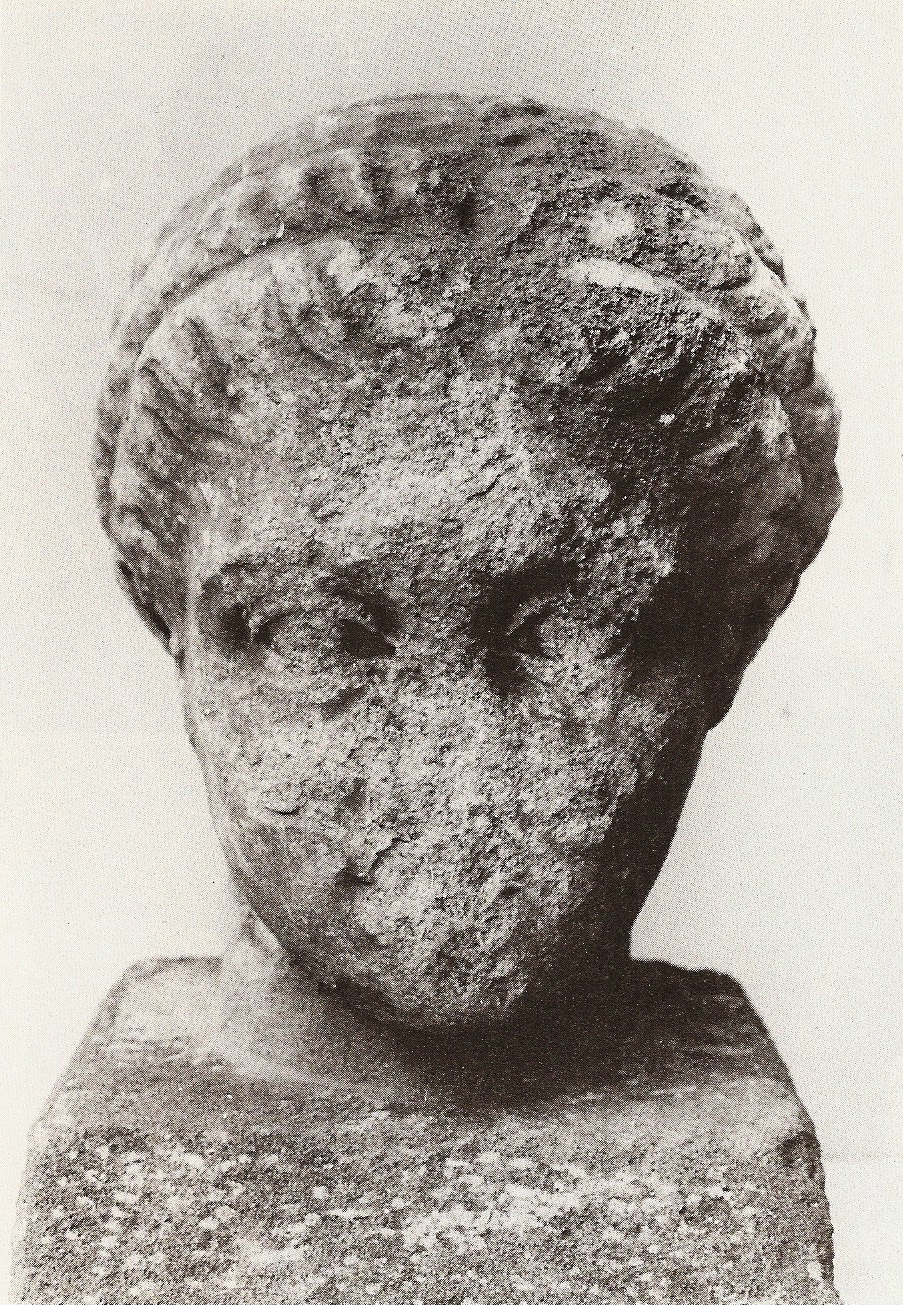
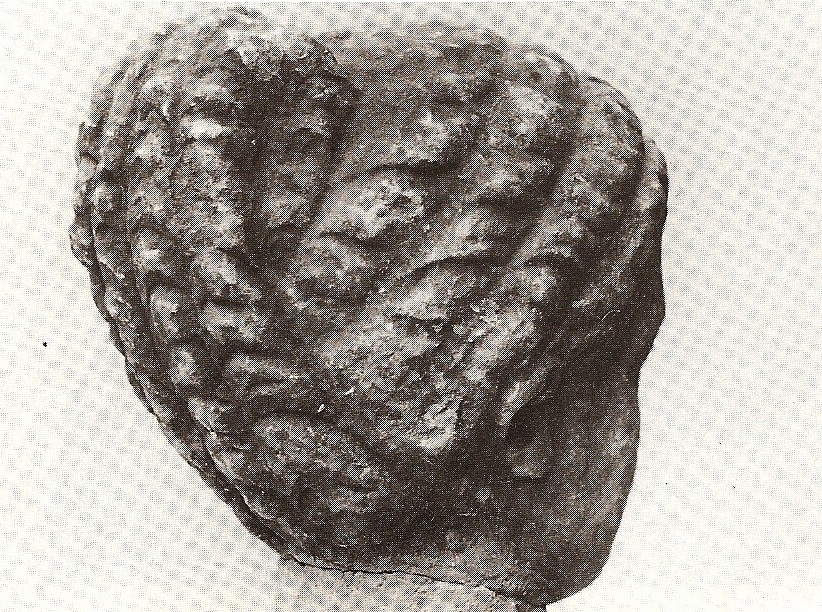
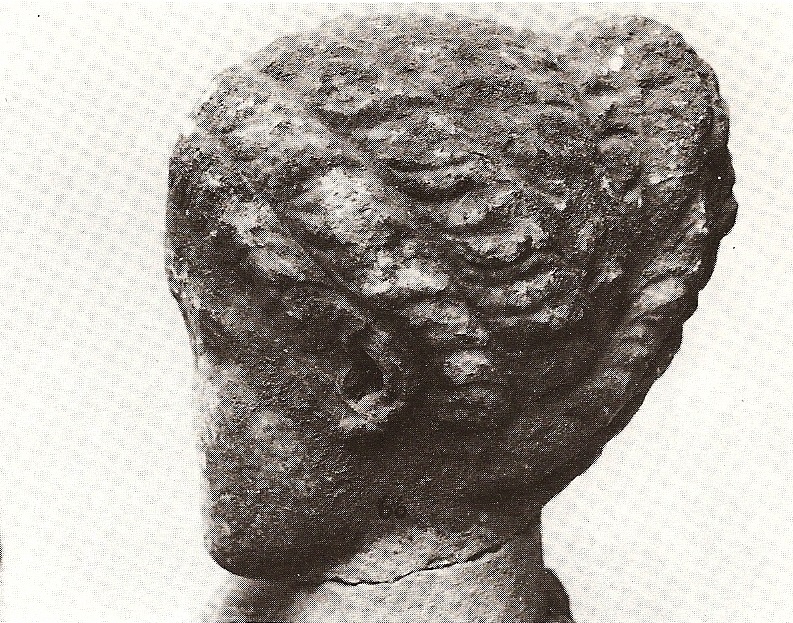
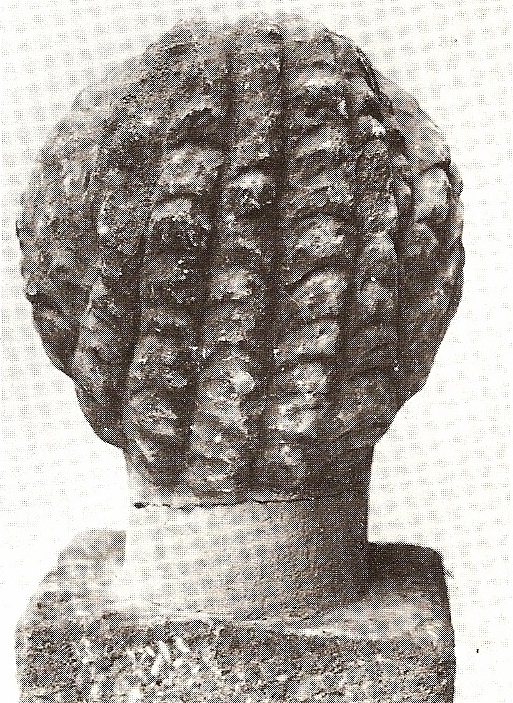
The head is preserved up to the beginning of the neck. The face is heavily worn, but retains most of the eyes. The forehead, eyebrows, nose, mouth (with the exception of its corners), and chin are not preserved. It depicts a teenage woman with an oval plump face, a narrow mouth, and almond-shaped eyes with wide lids. The drill has been used to mark the tear-duct and the corners of the mouth. The iris was incised (a trace of it is preserved on the left eye). The headdress is organized in parallel - vertical to the face – “slices”, which are separated from each other by deep channels and cover the entire surface of the skull (individual locks of hair are rendered with diagonal incisions on the surface of the marble). The ears are left completely uncovered. At the back of the skull, the mass of hair is woven into a protruding braid, placed vertically. The whole arrangement of the headdress (with the exception of the protruding braid at the back of the skull) follows the second portrait type of the empress Plautilla (“Vatican Sala dei Busti 300” type, 202 CE; for the type see J. Meischer, Das Frauenporträt der Severerzeit, Berlin 1967, 83-84; H.B. Wiggers, M. Wegner, Das Römische Herrscherbild. III.1. Caracalla, Geta, Plautilla, Macrinus bis Balbinus, Berlin 1971, 118-120).
H. Dressel, A. Milchhoefer, “Die antiken Kunstwerke aus Sparta und Umgebung”, ΑΜ 2 (1877), 370, no. 165; M.N. Tod, A.J.B. Wace, A Catalogue of the Sparta Museum, Oxford 1906, 144, no. 66 (Antonine period); A. Datsouli-Stavridi, “Ρωμαϊκά πορτραίτα στο Μουσείο Σπάρτης”, in Πρακτικά του Α’ Τοπικού Συνεδρίου Λακωνικών Μελετών, Μολάοι 5-7 Ιουνίου 1982 (Peloponnesiaka Suppl. 9), Athens 1982-1983, 308; A. Datsouli-Stavridi, Ρωμαϊκά πορτραίτα στο Μουσείο της Σπάρτης, Athens 1987, 23, no. 66, figs. 45-47 (period of Plautilla).