Description - Comments:
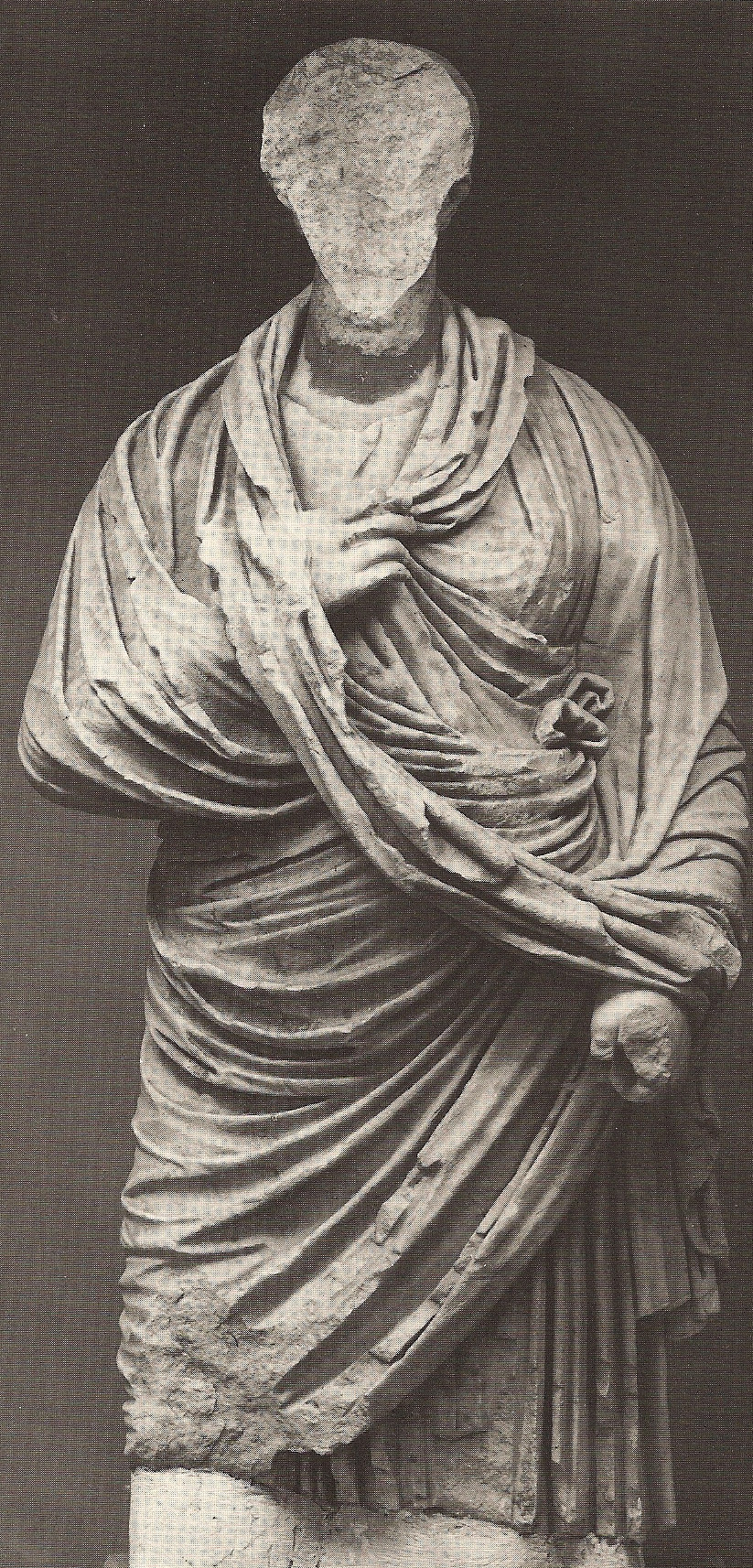
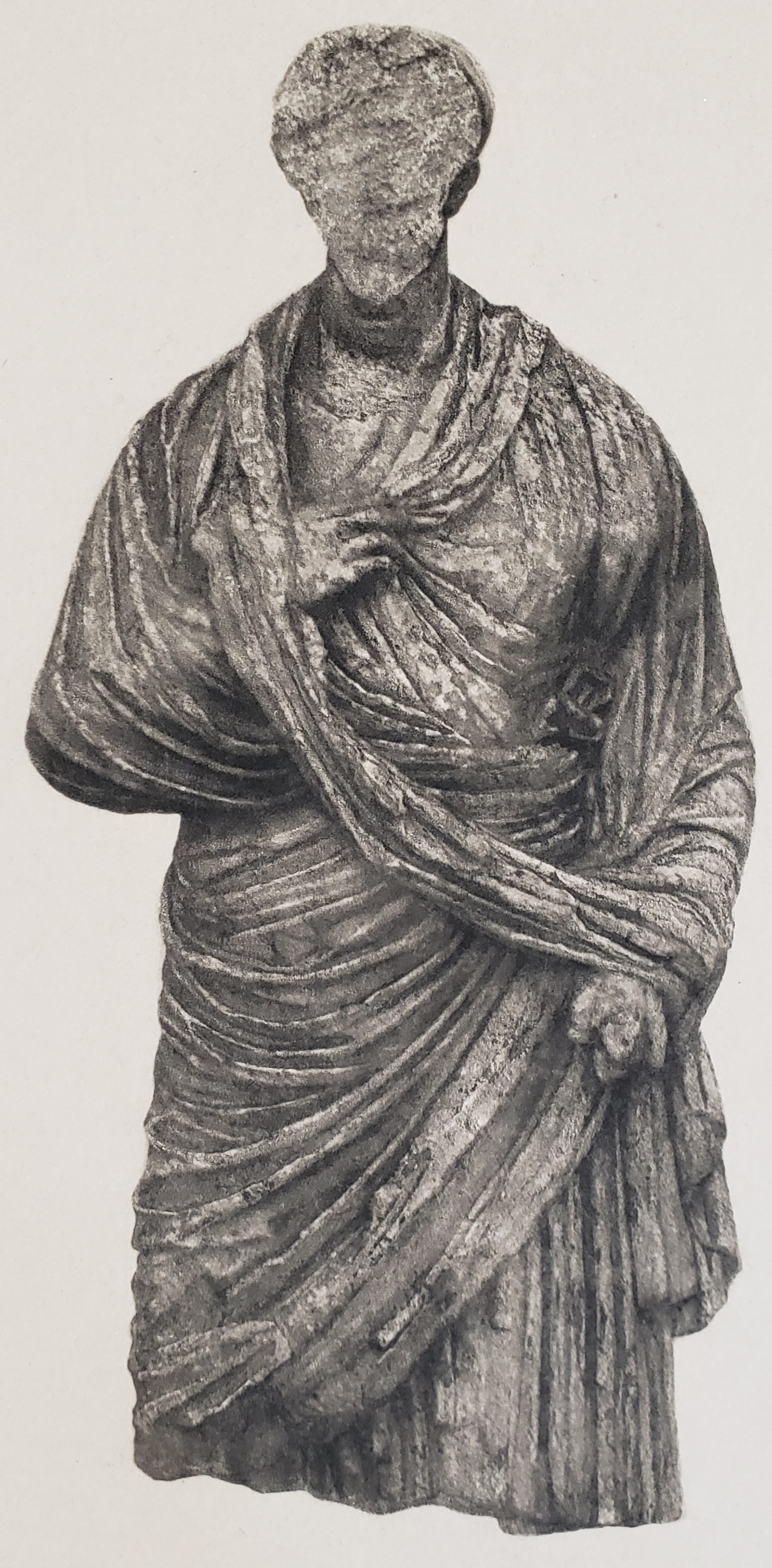
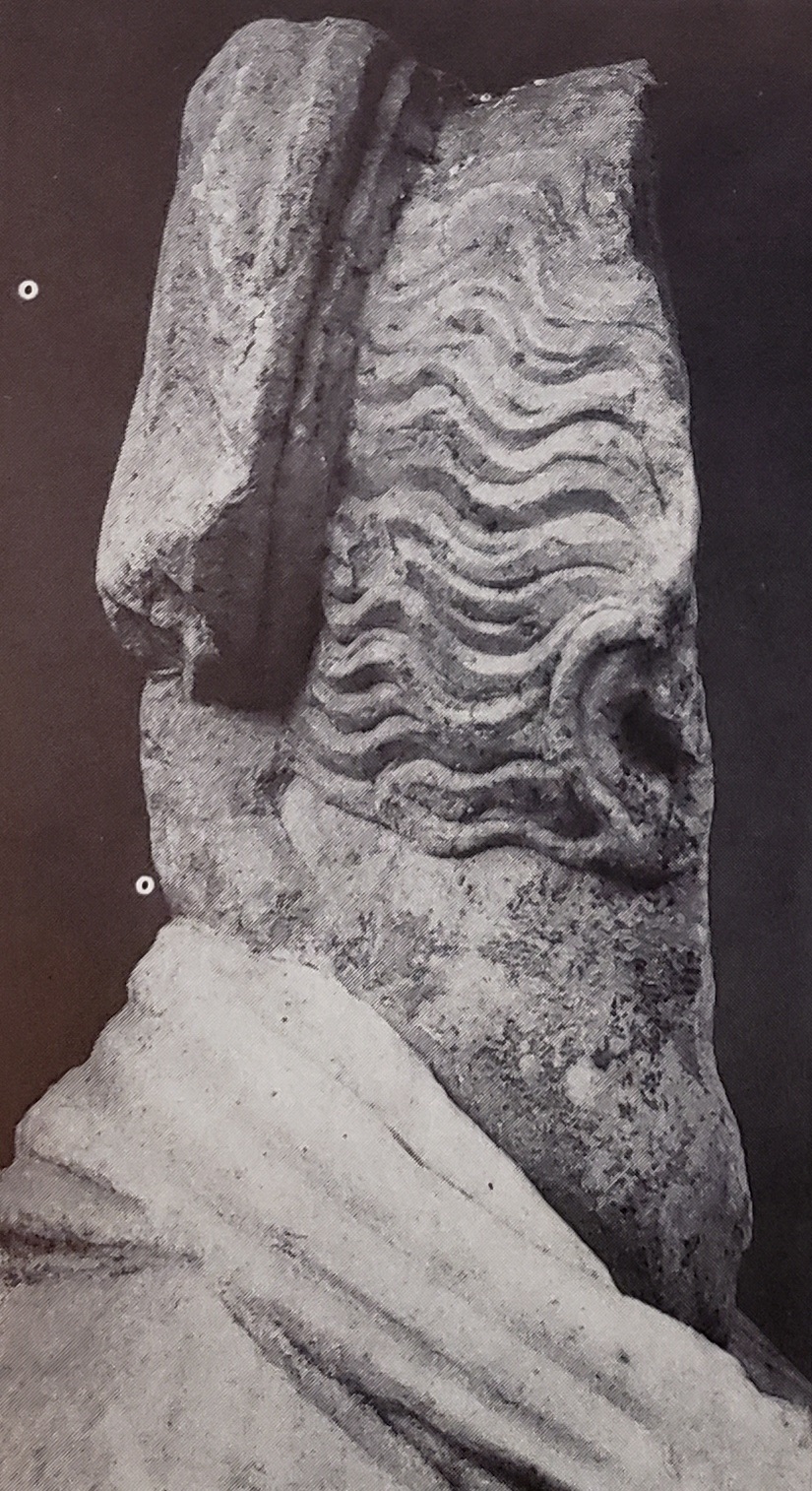
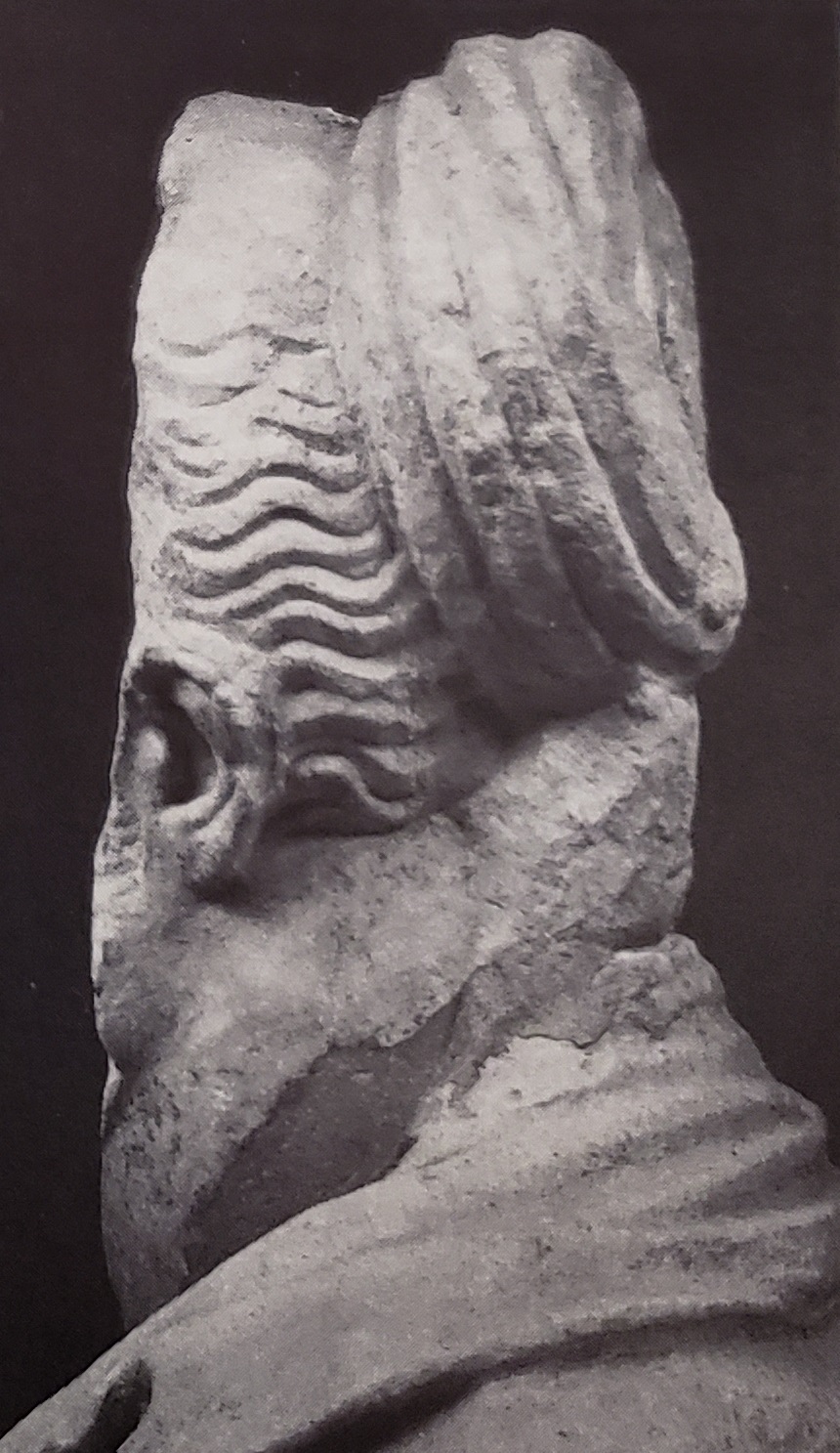
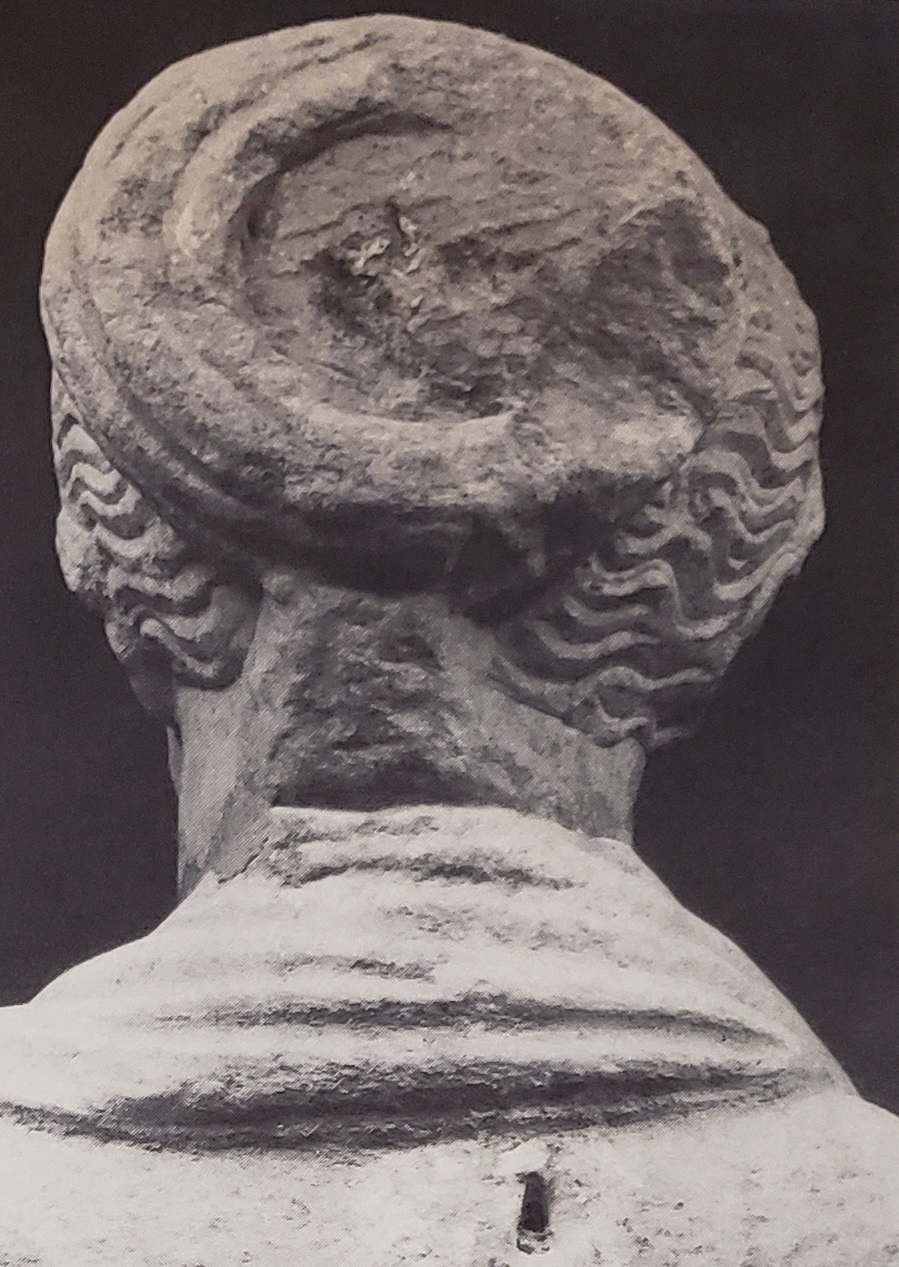
The upper body of the figure is preserved up to about the knees, with the neck and the back of the head. Broken are the front of the head, the fingers of the left hand and a small part of the front lower right part of the body. Smaller breaks and chipping are evident sporadically on the surface of the marble, especially along the ridges of the folds of the garments. It depicts a standing, frontal female figure, wearing a chiton and a wide himation that wraps tightly around the body. More specifically, the himation is wrapped in a rather complex way around the body, following for the most part the arrangement of the so-called “Formia” statuary type. It is wrapped tightly under the chest, while its front edge creates a characteristic triangular shape in its course from the right shoulder (the whole arm is covered with the exception of the wrist) to the slightly bending left forearm (its edge falls on the left forearm). The fingers of the bent right arm hold at the level of the neck the hem of the garment that descends from the left side of the neck; this positioning of the right arm brings the front edge of the himation more to the left, creating a triangular shape of the himation similar to that known from the “Large Herculaneum Woman” type. Only the back part of the coiffure survives. The hair is combed in wavy parallel locks towards the back (leaving the ears uncovered; its texture is rendered in wavy parallel incised lines on the surface of the marble), where it coils into an “open nest” type bun (coarsely chiseled). The hairstyle belongs to the Trajanic period, as evidenced by parallels such as the portrait statue of Antonia Cleodike from the neighboring Heraion ({Γ105}). Despite the out of fashion (older) hairstyle, the statue can be dated fairly precisely to the period 149-153 CE, during the principate of Antoninus Pius, based on the surviving inscriptions on the bases of the statues of the Nymphaeum sculptural program (Bol 1984, 98-100), indicating that the statue must be identified as a private individual of an older generation, an ancestor or woman of old age of Herodes Atticus’ family (see also {Γ116}). Nevertheless, the identity of the woman remains uncertain. We cannot know whether it depicts Regilla's mother, Atilia Caucidia Tertulla, her great-grandmother, Caucidia Tertulla, or Herode’s mother, Vibulia Alcia Agrippina. R. Bol identifies the figure with Herode’s mother, Vibulia Alcia Agrippina (connecting her to the fragmentary base IvO 621; Bol 1984, 123-124, cat. no. 12, fig. 54, pl. 8-9), and places it in the third niche from the right of the upper floor of the Nympaheum’s exedra. On the contrary, K. Hitzl and A. Kropp (2013) place the statue in the third from the right niche of the ground floor of the Nymphaeum’s exedra.
Bibliography:
G. Treu, Olympia III. Die Bildwerke von Olympia in Stein und Thon, Berlin 1894, 274, fig. 302, pl. 67.4; H. Kruse, Römische weibliche Gewandstatuen des zweiten jahrhunderts n.Chr., Göttingen 1975, 177 note 285, 375, cat. no. D88; R. Bol, Das Statuenprogramm des Herodes-Atticus-Nymphäums, OlForsch 15, Berlin 1984, 123-124, cat. no. 12, fig. 54, pls. 8-9 (base), 176-177, cat no. 39, pls. 39-41 (Vibulia Alcia Agrippina); Κ. Hitzl, A. Kropp, “Das Heiligtum von Olympia im 2. Jh. n. Chr. - Alte und neue Impressionen”, Boreas 36 (2013), 53-89; H.R. Goette, "The Portraits of Herodes Atticus and His Circle", in O. Palagia (ed.), Handbook of Greek Sculpture, Berlin 2019, 237; P. Konstantinidis, Γυναικείοι δυναστικοί εικονιστικοί ανδριάντες αυτοκρατορικής περιόδου από την Ελλάδα (τέλη 1ου αι. π.Χ. – 5ος αι. μ.Χ.), Athens 2024, 171, σημ. 268;
https://arachne.dainst.org/entity/1083481?fl=20&q=%22Olympia,%20Griechenland%22&resultIndex=78